
Getting Climby: A Guide to Uphill Riding
Who doesn’t love a good climb? The road ahead winding lazily up, trees lining the sides, and epic views the more vert you get. Just you, your bike, and the rhythmic breathing as you turn the pedals over. And over. And over.
So, what is the best way to approach a climb? How do we ride up the most efficient way possible? From short, steep and punchy climbs to long, sustained efforts, let’s dive into how to approach each.
Short & Steep
In Tennessee, we have no shortage of short and punchy climbs. The kind that hurt no matter what you do. I classify short and punchy as taking anywhere from 30 seconds to 2 minutes or so to climb. Short enough that you can see the top from the bottom of the climb.
Momentum: For short and punchy climbs, the best way to approach them is to come at them with a good amount of speed. This allows you to attack up and over carrying the momentum you’ve built at the bottom to help you up. If you know the climb is approaching, you want to build your speed coming into the bottom to a good, hard effort. Note that this is not a full-blown sprint, but a good hard effort! If you must do this repeatedly throughout a ride it will get tiring! Typically, staying in your big chain ring is the way to go to carry that momentum into the lower slope of the climb.
Long & Strong
The climb that just keeps on going. I classify a long climb as anything greater than 5 minutes. Long enough that you really have to measure your effort throughout the duration of the climb.
Settle: For these climbs it’s all about pacing, or managing, the effort. Instead of coming into a long climb in attack mode, approach this climb almost the opposite. If the gradient is steep enough, go ahead and shift into your small chain ring so you have all your easier gears available before you stress them under heavy load (making it hard to shift from big ring to small). Find your rhythm early, especially if you aren’t sure how long the climb is! This will allow you to measure your effort. If you have a power meter and know your threshold, look to hold steady power as you continue up the climb. Smooth is fast, and efficient.
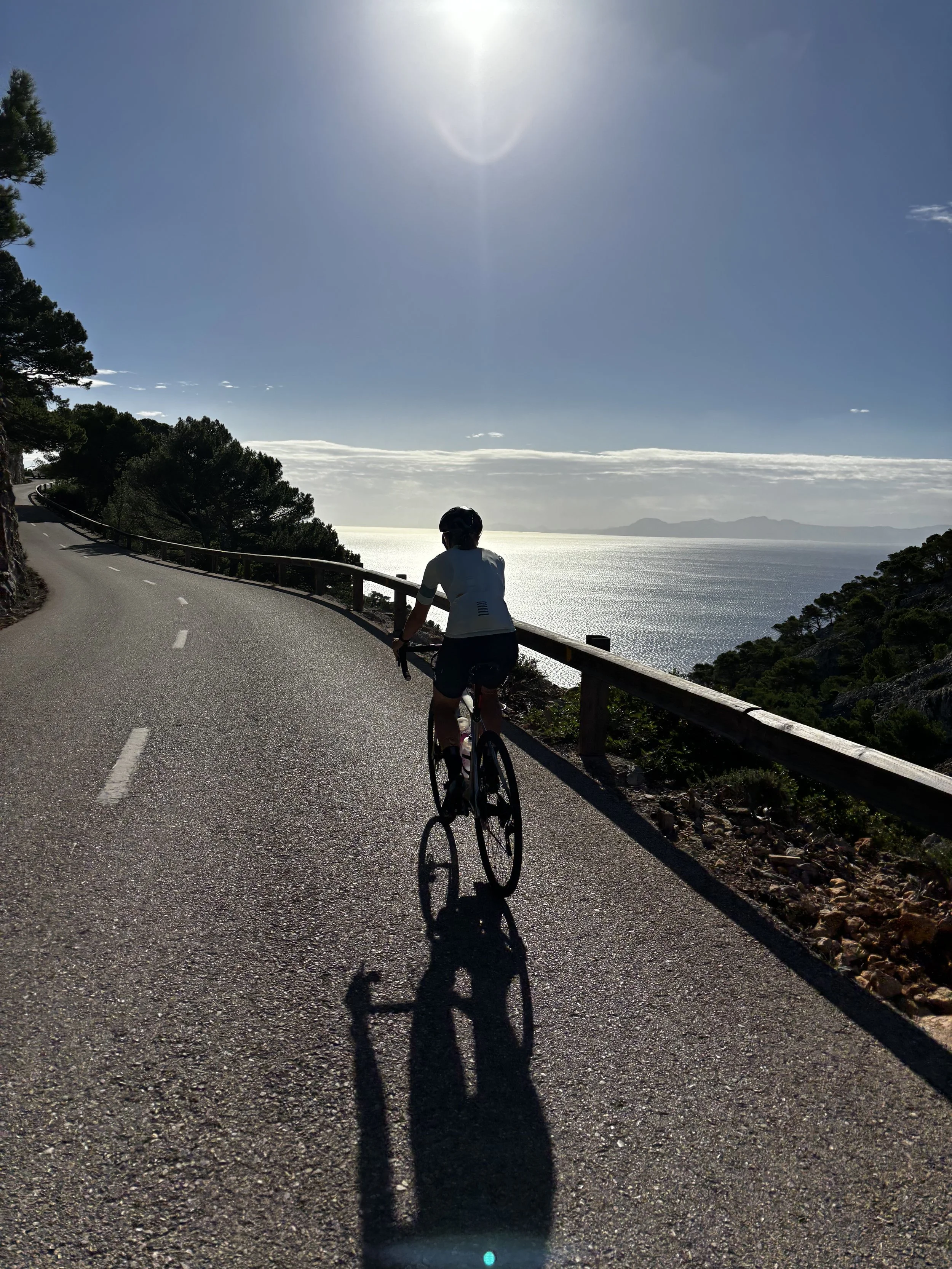
To Sit or Not to Sit
That is the question. A lot of it is personal preference and what kind of ride it is (solo training ride, hard group ride, race, etc.). For short and steep climbs, I find the best way to get up with speed is to be out of the saddle. This allows for more power to be generated as you’ve come into the climb with momentum. For long climbs I find staying seated and in a good rhythm is best. It can be easy to ride too hard out of the saddle, unless you are very good at riding out of the saddle!. Need a break? Then stand for several seconds to allow your body a change of position on that long climb. Then sit and get back into your groove.
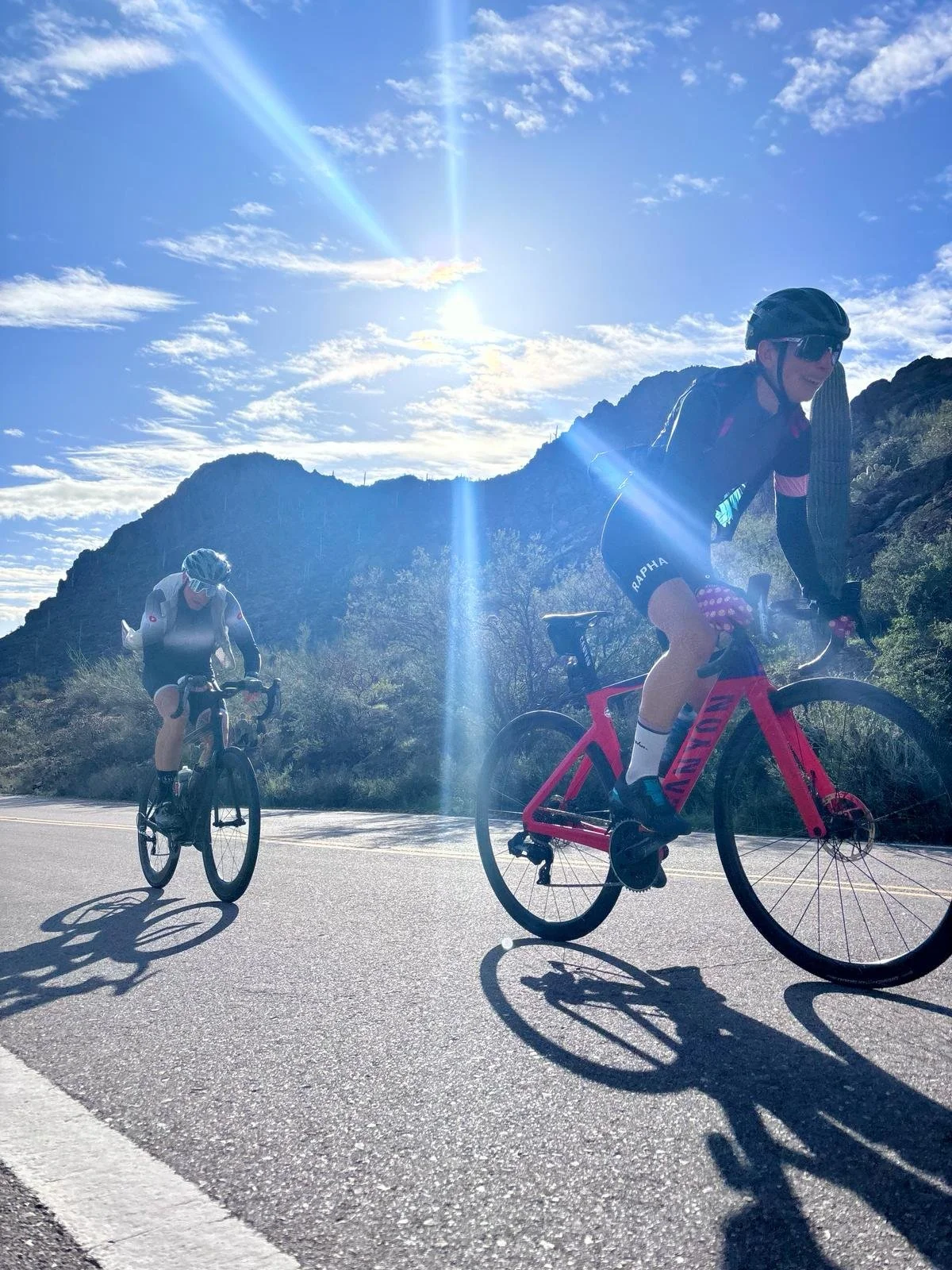
Tips
Keep cadence up, if possible. The less time you spend mashing into your pedals, your quads will thank you! It takes time to learn so practice shifting into easier gears to get cadence up. What works while you can still maintain a good, steady pace up the hill?
Standing may fatigue you quickly. If you aren’t used to standing while riding, you may notice your lower back ache or you just feel more tired more quickly. That is normal. Again, practice makes perfect!
As with anything, you’ll find your personal preferences. The more you climb a variety of hills you’ll find what works best for you as a rider.
Happy Climbing!